Why Do You Feel Sleepy After Eating? Blood Sugar Explained
If you feel sleepy after eating, you’re not alone.
That heavy eyelid feeling after lunch.
The afternoon crash.
The sudden need for coffee.
Many people assume it’s just “normal.” But in many cases, post-meal fatigue is connected to how your body handles blood sugar.
In this guide, we’ll explain:
- Why you feel sleepy after eating
- What post meal fatigue really means
- Common blood sugar crash symptoms
- Simple ways to stabilize energy
- When to pay closer attention
Let’s break it down in simple terms.
What Happens in Your Body After You Eat?
When you eat — especially carbohydrates — your body breaks them down into glucose.
Glucose enters your bloodstream.
Your pancreas releases insulin.
Insulin helps move that glucose into cells for energy.
When everything works smoothly, you feel energized.
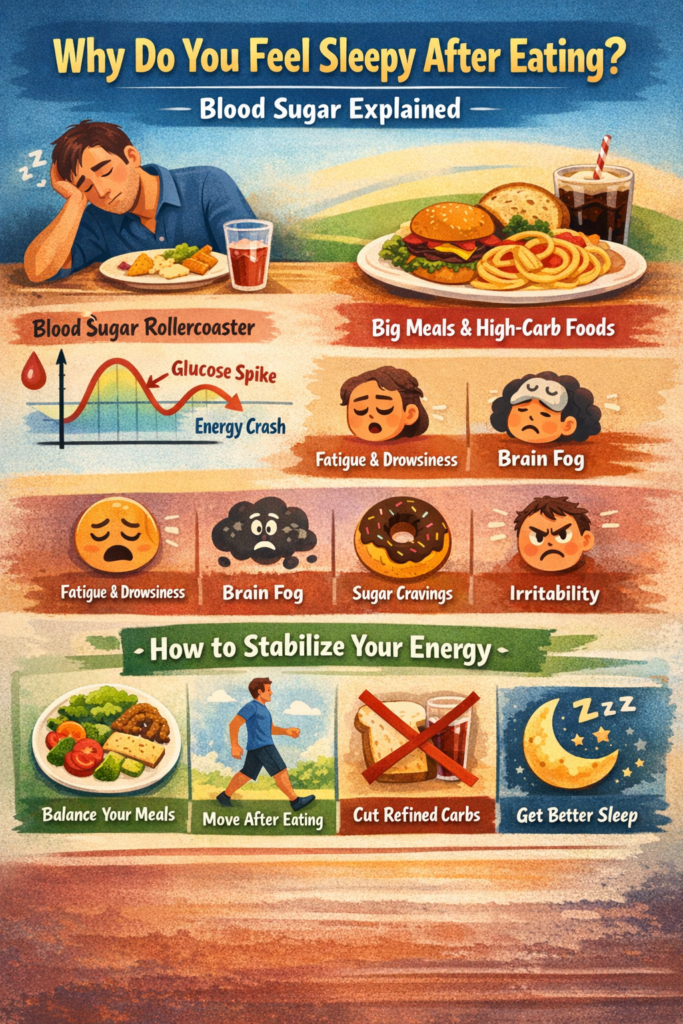
But when blood sugar rises quickly and then drops fast, that’s when the crash happens.
And that crash often feels like:
- Sudden tiredness
- Brain fog
- Irritability
- Sugar cravings
- Lack of focus
That’s what many people describe as post meal fatigue.
Why Do You Feel Sleepy After Eating?
There are a few common reasons.
1️⃣ Blood Sugar Spikes and Crashes
Highly refined carbohydrates — like white bread, pastries, sugary drinks — digest quickly.
This causes a rapid glucose spike.
Your body releases a large amount of insulin.
Then blood sugar drops rapidly.
That drop can cause:
- Drowsiness
- Weakness
- Mental fog
- Shakiness
These are classic blood sugar crash symptoms.
2️⃣ Large Portion Sizes
Big meals require more digestion.
Blood flow shifts toward the digestive system.
This can temporarily reduce alertness.
3️⃣ High-Carb, Low-Protein Meals
Meals low in protein and fiber digest faster.
They cause sharper glucose swings.
Balanced meals digest more slowly and provide steadier energy.
4️⃣ Insulin Sensitivity Issues
If your body isn’t responding efficiently to insulin, glucose regulation becomes less stable.
This can lead to:
- Frequent energy crashes
- Increased hunger
- Strong sugar cravings
If you want to understand how insulin sensitivity works in more detail, read our guide on how to naturally support healthy blood sugar levels.
Common Blood Sugar Crash Symptoms
You might be experiencing blood sugar instability if you notice:
- Feeling sleepy 30–90 minutes after eating
- Intense carb cravings
- Afternoon energy dips
- Irritability when hungry
- Headaches between meals
- Difficulty concentrating
One isolated crash isn’t a big deal.
But frequent crashes may signal metabolic imbalance.
How to Stop Feeling Sleepy After Eating
Here are practical, science-based strategies.
✔ 1. Balance Your Plate
Instead of:
White rice + soda
Try:
Lean protein + vegetables + healthy fats + moderate carbs
Protein and fiber slow glucose absorption.
✔ 2. Walk After Meals
A 10–20 minute walk after eating improves glucose uptake.
Muscles use circulating glucose efficiently.
This is one of the simplest ways to reduce post-meal fatigue.
✔ 3. Reduce Refined Carbohydrates
Swap:
White bread → Whole grains
Sugary drinks → Water
Pastries → Nuts or fruit
Small adjustments make a big difference.
✔ 4. Improve Sleep
Poor sleep reduces insulin sensitivity.
Even one night of bad sleep can increase glucose variability.
Aim for consistent 7–8 hours.
✔ 5. Track Your Patterns
Energy crashes aren’t random.
They usually follow certain meals.
That’s why tracking helps.
If you want a simple method, see our 14-day tracking plan where we explain how to monitor energy levels, cravings, and post-meal symptoms.
Tracking builds awareness.
Awareness builds control.
Can Supplements Help With Post-Meal Fatigue?
Lifestyle always comes first.
But some ingredients have been studied for supporting glucose balance and metabolic stability.
For example:
- Gymnema Sylvestre may support glucose regulation
- African Mango has been studied for metabolic markers
- Adaptogens like Eleuthero may support energy balance
Some formulas combine these ingredients into broader metabolic blends. If you’re exploring supplement options, you can see how these ingredients work together in our detailed GlucoTonic review.
Remember: supplements support habits — they don’t replace them.
When Should You Be Concerned?
Occasional sleepiness after eating isn’t necessarily dangerous.
But consult a healthcare professional if you experience:
- Persistent dizziness
- Fainting
- Severe shakiness
- Diagnosed prediabetes or diabetes
- Frequent hypoglycemic episodes
Blood sugar health is important.
Early awareness prevents long-term complications.
The Bigger Picture: Energy Is a Metabolic Signal
Feeling sleepy after eating is often your body telling you something.
It may be saying:
- “That meal was too refined.”
- “Your insulin response needs support.”
- “You need more movement.”
- “Your sleep needs attention.”
Instead of masking the crash with caffeine, consider addressing the root cause.
Stabilizing blood sugar improves:
- Energy
- Mood
- Cravings
- Focus
- Long-term metabolic health
Final Thoughts
If you feel sleepy after eating, don’t ignore it.
Post meal fatigue is often connected to how your body manages glucose.
The good news?
Small changes can make a big difference:
- Balance your meals
- Move after eating
- Improve sleep
- Track your symptoms
Energy stability is not about perfection.
It’s about consistency.

Ammar is a health supplement researcher and professional content writer with over five years of experience analyzing nutritional formulas, clinical studies, and ingredient safety profiles.
He specializes in reviewing blood sugar, metabolic health, and weight management supplements using evidence-based research and publicly available clinical data.
Before publishing any review, Ammar carefully examines ingredient transparency, scientific support, potential side effects, and manufacturer credibility to provide balanced, unbiased insights.
His goal is simple: to help readers make informed decisions based on research — not marketing hype.
When he’s not analyzing supplement formulations, he studies emerging research in metabolic health and natural medicine to stay updated with the latest scientific findings.